
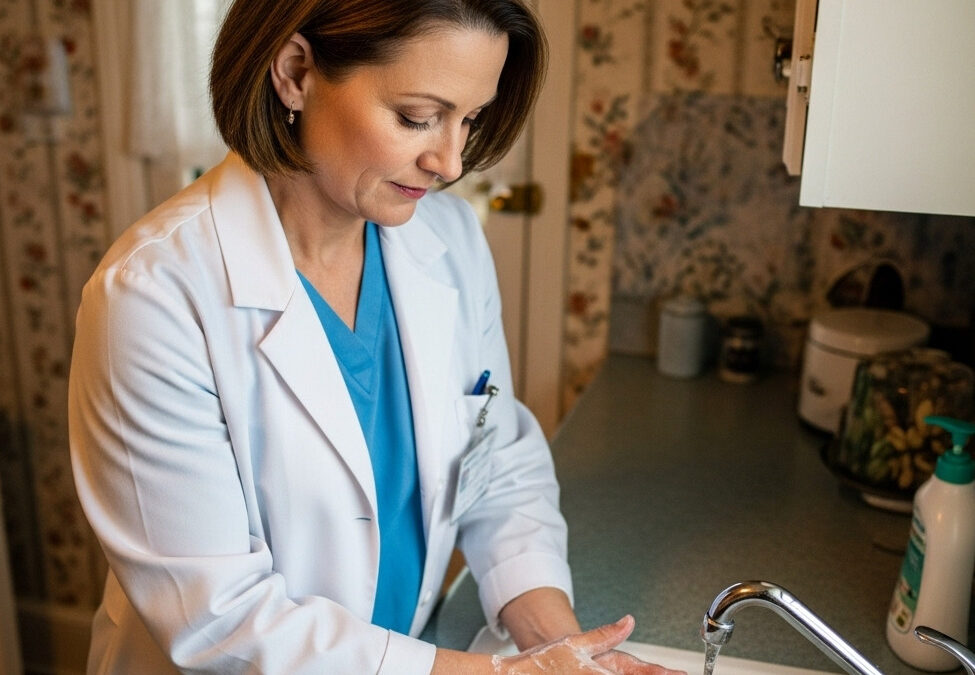


Did you know that thousands of people die every day from preventable infections? One of the most common ways infections are spread is through our hands. For home health care professionals, proper handwashing is not just a guideline—it’s a critical shield that protects our clients from serious health threats. At Professional Home Care Services, Inc., we consider it the single most important practice in preventing the transmission of infections.
The Right Way to Wash Your Hands
Effective handwashing is more than just a quick rinse. It’s a systematic process that, when done correctly, removes harmful germs and bacteria. Here is the proper technique our nurses, therapists, and personal care workers use to ensure client safety:
- Wet Your Hands: Turn on the water to a comfortable temperature. Hold your hands lower than your elbows to prevent water from running up your arms and becoming a breeding ground for bacteria on your clothes. Wet your hands and wrists thoroughly.
- Lather Up: Apply a generous amount of soap and rub your hands together to create a rich lather. Be sure to scrub all surfaces, including the backs of your hands, between your fingers, and under your fingernails. Continue this for at least 20 seconds—about the time it takes to hum “Happy Birthday” twice. Friction is key to lifting away germs.
- Clean Your Nails: Gently clean under your fingernails and around the cuticles with a brush or by rubbing them against the palm of your other hand.
- Rinse Thoroughly: Hold your hands downwards under the running water, allowing the soap and germs to wash away into the sink. Avoid touching the inside of the sink, as it can be contaminated.
- Dry Completely: Use a clean, dry paper towel to dry your hands from your fingertips up towards your wrists. This prevents recontamination from less clean areas.
- Turn Off the Faucet Safely: Use a clean, dry paper towel to turn off the faucet. This prevents you from picking up germs you just washed away. Dispose of the towel in a waste container without touching the container itself.
A Note on Hand Sanitizer: An alcohol-based hand sanitizer (with at least 60% alcohol) is a great alternative when your hands are not visibly soiled. It’s fast, effective, and can be less harsh on your skin.
When Handwashing Makes a Difference: Real-Life Scenarios
Meticulous hand hygiene is woven into every aspect of the care our team provides. Here are three examples of how a Professional Home Care Services nurse’s commitment to handwashing prevented potentially life-threatening infections:
- Preventing a Surgical Site Infection: One of our skilled nurses was caring for an elderly client who had recently returned home after hip replacement surgery. The client was anxious about keeping his incision clean. Before and after each dressing change, the nurse diligently washed her hands. When a family member, meaning well, reached out to touch the new dressing, the nurse politely intervened and explained the importance of clean hands. By adhering to this strict hand hygiene protocol, she prevented bacteria from being introduced to the vulnerable surgical site, allowing the client to heal without the complication of a painful and dangerous infection.
- Averting a Catheter-Associated Urinary Tract Infection (CAUTI): A home-bound client with a long-term urinary catheter was susceptible to urinary tract infections (UTIs), which can quickly become serious in older adults. Our nurse understood that the connection point of the catheter bag is a critical area for germ entry. Every time she emptied the drainage bag or performed catheter care, she washed her hands thoroughly before and after putting on gloves. This simple, consistent act was crucial in preventing bacteria from traveling up the catheter and causing a severe UTI, which could have led to hospitalization.
- Stopping the Spread of C. difficile: A client was discharged from a facility with a Clostridioides difficile (C. diff) infection, a stubborn bacterium that causes severe diarrhea and is easily spread. Our nurse knew that alcohol-based sanitizers are not effective against C. diff spores. She was meticulous about washing her hands with soap and water before entering and after leaving the client’s room, and especially after any contact with the client or their environment. Her diligence not only protected herself but also prevented the spread of C. diff to the client’s family members and other clients she would visit later that day.
Your Health is in Your Hands
The simple act of washing your hands is a powerful tool in the fight against infection. We encourage our clients and their families to also practice good hand hygiene.
For more information from trusted sources on the importance of handwashing, please visit the following government websites:
- Centers for Disease Control and Prevention (CDC): When and How to Wash Your Hands
- Wisconsin Department of Health Services: Handwashing
Are you or a loved one in need of compassionate, skilled home health care? From skilled nursing and therapy to personal care and support, Professional Home Care Services, Inc. is here for you. We are committed to providing the highest quality of care in the comfort of your own home. Call us today at (414) 541-6010 to learn how we can help.
Are you a dedicated and compassionate home health professional? Professional Home Care Services, Inc. is seeking skilled nurses, therapists, and personal care workers to join our growing team. If you are passionate about making a difference in the lives of others, we want to hear from you. Please call us at (414) 541-6010 or stop by our office at 10827 W Lincoln Ave., West Allis, WI 53227 to apply.


Recent Comments