
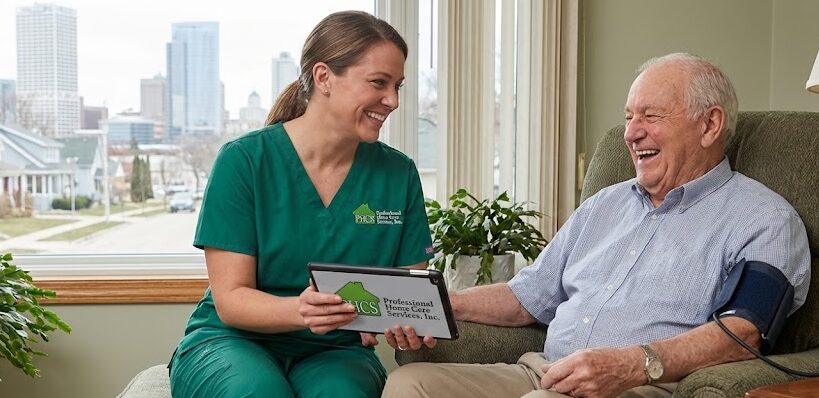


At Professional Home Care Services, Inc. (PHCS), we know that managing health conditions at home requires more than just medical supplies—it requires a team that truly cares. For many of our clients living in West Allis, Milwaukee, and the surrounding Metro area, one of the most significant health concerns is the development of pressure ulcers (commonly known as bedsores or decubitus ulcers).
These wounds can develop quickly, causing significant pain and increasing the risk of serious infection. However, with the right support, they are often preventable and treatable.
As a home health agency serving Southeastern Wisconsin for nearly 35 years, our dedicated team of Registered Nurses (RNs) and Personal Care Workers (PCWs) brings deep expertise to the prevention, healing, and management of pressure ulcers.
What Are Pressure Ulcers?
Pressure ulcers are injuries to the skin and underlying tissue, typically occurring over bony areas such as the heels, ankles, hips, and tailbone. They are caused by prolonged pressure on the skin, which limits blood flow to the area. Without oxygen and nutrients, the tissue becomes damaged and eventually dies.
For Milwaukee seniors or individuals with limited mobility, factors like friction (rubbing against sheets) or shear (sliding down in a bed or chair) can accelerate this damage.
Classifying Pressure Ulcers: Understanding the Stages
To provide the best home health care, it is vital to understand the severity of a wound. Physicians and our Registered Nurses classify pressure ulcers into four stages:
- Stage 1: The skin is intact but shows non-blanchable erythema (redness that does not turn white when pressed). The area may feel painful, firm, soft, warmer, or cooler than nearby skin.
- Stage 2: There is partial-thickness skin loss involving the epidermis or dermis. The wound presents as a shallow, open ulcer with a red-pink bed, or as a blister (intact or ruptured).
- Stage 3: Full-thickness tissue loss. Subcutaneous fat may be visible, but bone, tendon, or muscle are not exposed. Slough (dead tissue) may be present.
- Stage 4: The most severe stage involves full-thickness tissue loss with exposed bone, tendon, or muscle. Slough or eschar (dark, crusty tissue) is often present. These wounds pose a high risk of infection.
- Unstageable: The base of the ulcer is covered by slough (yellow/tan/green) or eschar (brown/black), making it impossible to see the true depth until the wound is cleaned (debrided).
- Deep Tissue Pressure Injury (DTPI): This appears as a localized area of persistent non-blanchable deep red, maroon, or purple discoloration. It results from intense pressure at the bone-muscle interface.
How Our Milwaukee RNs Promote Healing
At Professional Home Care Services, Inc., our Registered Nurses act as the frontline defense in wound management. We don’t just change dressings; we implement a holistic care plan tailored to the client’s home environment in Milwaukee.
- Comprehensive Assessment: We evaluate the wound’s size, depth, and drainage, while also assessing the client’s overall health, including diabetes or vascular issues that might slow healing.
- Advanced Wound Care: Our RNs are skilled in modern wound care techniques, ensuring the correct dressing selection to maintain the right moisture balance for healing.
- Nutritional Collaboration: Healing a wound requires “building blocks” like protein, Vitamin C, and Zinc. Our nurses assess nutritional intake and provide dietary guidance to support tissue repair.
- Pain Management: We work closely with the client’s physician to manage pain effectively, using both medication and gentle positioning techniques.
- Physician Liaison: We serve as the eyes and ears for the doctor, providing regular updates on the wound’s progress to ensure the treatment plan remains effective.
The Vital Role of PCWs in Prevention
While our RNs manage the clinical care, our Personal Care Workers (PCWs) are the heroes of daily prevention. Because they spend the most time with clients—helping with bathing, dressing, and housekeeping—they are often the first to notice changes.
Under the supervision of our RNs, our PCWs:
- Prioritize Repositioning: For bedbound or chair-bound clients, consistent turning (usually every 2 hours) is critical to relieve pressure.
- Maintain Hygiene: Moisture from sweat or incontinence can break down skin (maceration). Our PCWs ensure the skin remains clean, dry, and moisturized.
- Observe & Report: Our staff is trained to spot early warning signs—a red spot on the heel or a complaint of tenderness—and report it to the nurse immediately.
- Optimize Mobility: We encourage movement and ambulation tailored to the client’s ability, which improves overall circulation.
Why Choose Professional Home Care Services, Inc.?
When dealing with complex wounds, experience matters. Our agency is located locally at 10827 W Lincoln Ave, West Allis, WI, and we have been a trusted partner in the community for decades. We understand the local healthcare landscape and work seamlessly with Milwaukee-area hospitals and case managers to ensure a smooth transition home.
Contact Us for Specialized Home Care
If you are a Case Manager or Social Worker seeking reliable care for a client, or a family member worried about a loved one’s skin health, we are here to help.
Call us today at (414) 541-6010 to discuss a personalized care plan. You can also visit us online at www.phcsonline.com.
Join Our Caring Team in Milwaukee!
Are you a compassionate Registered Nurse (RN) or a dedicated Personal Care Worker (PCW) looking for a rewarding career in home health care?
Professional Home Care Services, Inc. is hiring talented individuals who are passionate about making a difference in the lives of our Milwaukee neighbors. We offer a supportive work environment where your skills in wound care and patient support are truly valued.
To learn more about our employment opportunities, or submit an application directly on our website: Apply for Home Care Jobs.


Recent Comments