
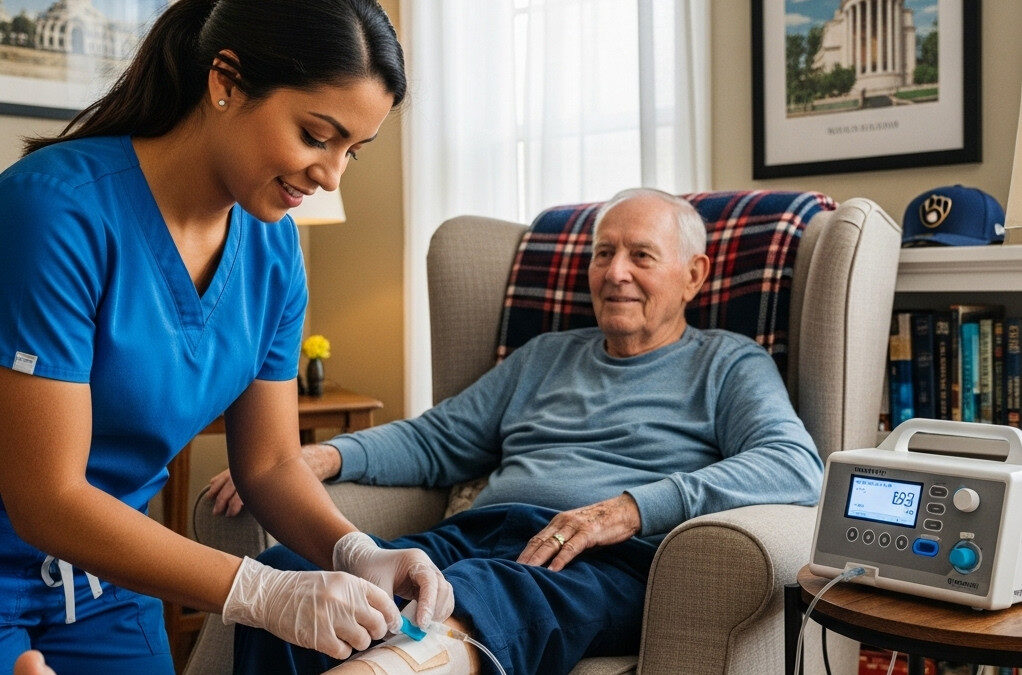


At Professional Home Care Services, Inc., we are committed to providing the most advanced and effective home health solutions to our clients in Milwaukee and the surrounding areas. One such innovative treatment that has significantly improved patient outcomes is Negative Pressure Wound Therapy (NPWT). This article will delve into the intricacies of NPWT, its development, the types of wounds and patients who benefit most, and heartwarming success stories from our very own Milwaukee community.
What is Negative Pressure Wound Therapy (NPWT)?
Negative Pressure Wound Therapy, often referred to as NPWT or simply “wound vac” therapy, is a cutting-edge medical treatment that uses a vacuum-assisted closure system to promote wound healing. It involves applying controlled negative pressure (suction) to a wound bed through a specialized dressing.
Imagine a wound that is struggling to heal – perhaps it’s large, has a lot of drainage, or is infected. NPWT creates an optimal environment for healing by:
- Removing Excess Fluid: The gentle suction effectively draws out exudate, pus, and other infectious materials from the wound, preventing maceration (softening of the skin due to moisture) and reducing bacterial load.
- Increasing Blood Flow: The negative pressure helps to expand blood vessels in the wound area, bringing more oxygen and nutrients to the tissues, which are vital for repair.
- Promoting Granulation Tissue Formation: Granulation tissue is new, healthy connective tissue and tiny blood vessels that form on the surface of a wound during the healing process. NPWT encourages its rapid growth, effectively filling the wound bed.
- Reducing Edema: By removing excess fluid, NPWT helps to decrease swelling around the wound, which can otherwise impede healing.
- Bringing Wound Edges Closer Together: The sustained negative pressure gently pulls the edges of the wound together, reducing its overall size and facilitating closure.
Here’s a visual representation of how NPWT works:
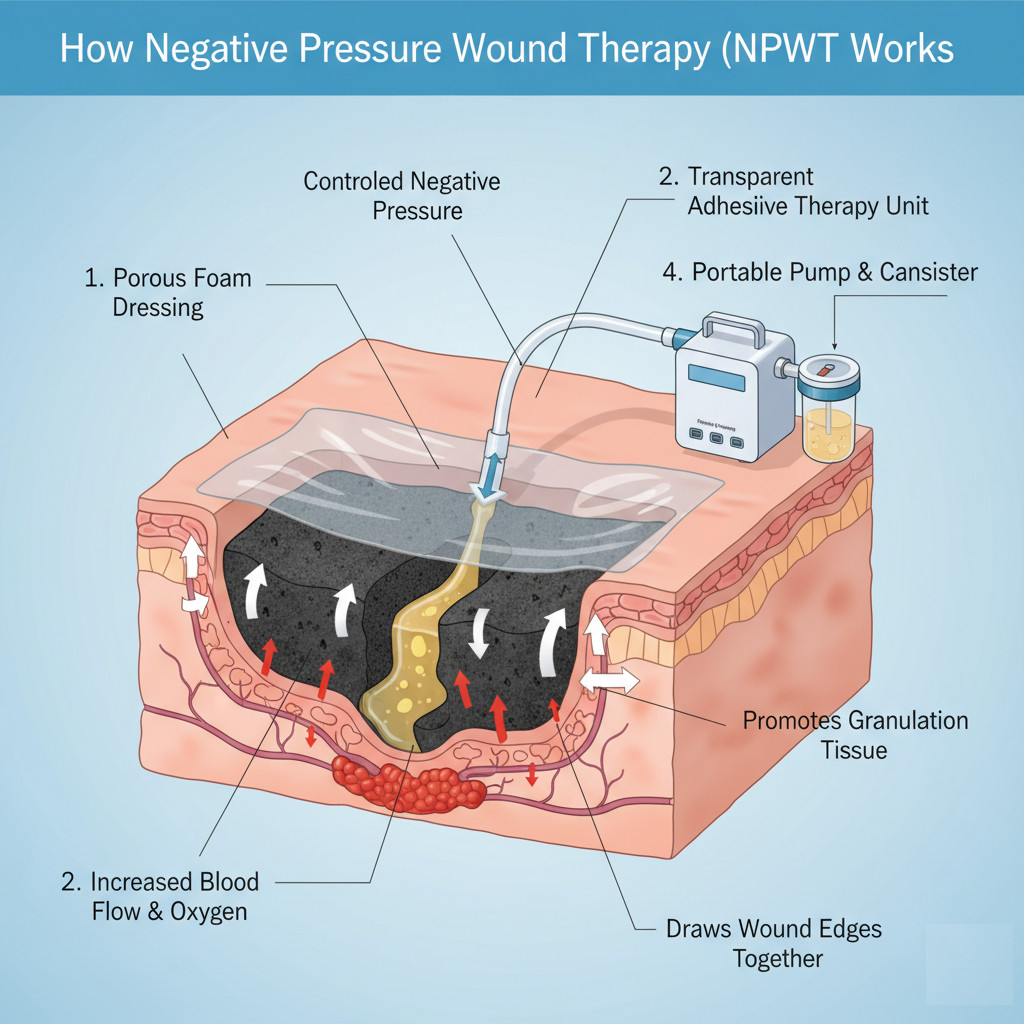
Image Excerpt: An illustration of the Negative Pressure Wound Therapy (NPWT) system showing a foam dressing, transparent adhesive, and portable pump, with arrows indicating increased blood flow and fluid removal. This image helps Milwaukee residents visualize advanced wound care.
The Development of NPWT
The concept of using negative pressure for wound healing isn’t entirely new, with early applications dating back to ancient times involving cupping. However, the modern form of NPWT began to take shape in the late 20th century.
In the 1990s, pioneering research by Dr. Louis Argenta and Dr. Michael Morykwas revolutionized wound care. They published seminal work demonstrating the efficacy of applying controlled negative pressure to chronic wounds. Their initial studies, often involving complex and challenging wounds, showed remarkable improvements in healing rates, reduced infection, and decreased need for surgical interventions.
This groundbreaking research led to the development of commercial NPWT devices, making this advanced therapy accessible to a wider range of patients. Today, NPWT systems are more portable and user-friendly than ever, making them ideal for home health settings like those provided by Professional Home Care Services, Inc. in Milwaukee.
Here’s an example of an early concept of negative pressure for wound healing:
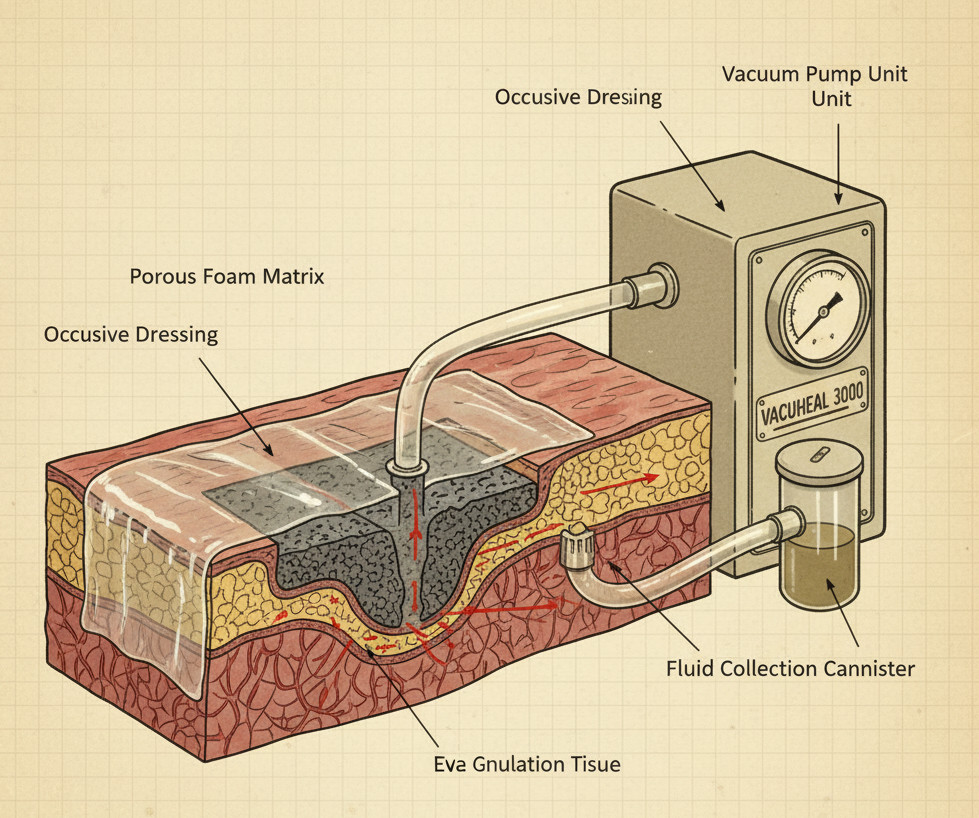
Image Excerpt: A retro-style illustration depicting an early “Vacuheal 3000” vacuum pump unit connected to a wound with an occlusive dressing and porous foam matrix, demonstrating the historical development of negative pressure wound therapy. This image educates Milwaukee readers on the evolution of NPWT.
Who Benefits Most from NPWT?
Negative Pressure Wound Therapy is a versatile treatment, but it’s particularly effective for certain types of patients and wounds that our Milwaukee home health nurses frequently encounter:
- Chronic Wounds: Wounds that fail to heal within a typical timeframe (usually 4-6 weeks) are considered chronic. These include:
- Diabetic Ulcers: Common in patients with diabetes, often on the feet, and prone to poor healing due to impaired circulation and nerve damage.
- Pressure Injuries (Bedsores): Develop due to prolonged pressure on the skin, often over bony prominences, and can be challenging to heal.
- Venous Leg Ulcers: Caused by poor blood flow in the leg veins, leading to skin breakdown.
- Acute Wounds: While often associated with chronic wounds, NPWT can also accelerate healing in acute wounds, such as:
- Traumatic Wounds: From accidents or injuries, especially those with significant tissue loss.
- Surgical Wounds (Dehisced): Wounds that have opened up after surgery, or those at high risk of complications.
- Skin Grafts and Flaps: NPWT helps to secure grafts and promote their integration, improving success rates.
- Wounds with Heavy Exudate or Infection: The continuous removal of fluid and reduction of bacteria makes NPWT an excellent choice for managing heavily draining or infected wounds, preventing further complications.
- Patients with Limited Mobility: For individuals who are bedridden or have difficulty moving, NPWT can provide effective wound care in their own homes, reducing the need for frequent clinic visits and hospitalizations. This is a significant benefit for our Milwaukee home care patients.
Success Stories: NPWT in Milwaukee Home Health
At Professional Home Care Services, Inc., we’ve witnessed firsthand the transformative power of NPWT for our clients across Milwaukee. Here are a few anonymized examples:
- Mr. Johnson’s Diabetic Foot Ulcer: Mr. Johnson, a 72-year-old from Milwaukee’s South Side, had a stubborn diabetic foot ulcer that hadn’t responded to conventional dressings for months. It was affecting his mobility and quality of life. Our skilled home health RN initiated NPWT. Within weeks, the wound showed remarkable improvement, with vibrant granulation tissue filling the defect. Mr. Johnson was able to resume his daily walks around his neighborhood, thanks to the dedicated care and NPWT.
- Mrs. Rodriguez’s Post-Surgical Wound: Mrs. Rodriguez, a 65-year-old resident of the Near West Side, experienced a complication after abdominal surgery, leading to a dehisced wound. The prospect of prolonged hospital stays was daunting for her and her family. Our team introduced NPWT at home. The therapy effectively managed the wound exudate and accelerated tissue regrowth, allowing Mrs. Rodriguez to recover comfortably in her familiar Milwaukee home environment.
- Mr. Lee’s Pressure Injury: Mr. Lee, an 88-year-old in the North Shore area of Milwaukee, developed a deep pressure injury during a period of immobility. His family was concerned about infection and further deterioration. Professional Home Care Services, Inc. deployed an RN specializing in wound care who implemented NPWT. The wound responded beautifully, shrinking significantly and showing signs of healthy healing, which greatly improved Mr. Lee’s comfort and reduced his family’s worries.
Conclusion
Negative Pressure Wound Therapy is a testament to the advancements in modern medicine, offering a powerful tool for healing complex wounds. For residents of Milwaukee, Professional Home Care Services, Inc. brings this sophisticated therapy directly into your home, delivered by compassionate and highly skilled nurses. Our commitment to utilizing treatments like NPWT ensures faster healing, reduced complications, and an improved quality of life for our valued clients. If you or a loved one in the Milwaukee area could benefit from advanced wound care, including NPWT, don’t hesitate to contact us.
Are you a Home Health RN in Milwaukee looking to make a difference?
Professional Home Care Services, Inc. is always seeking dedicated and skilled Registered Nurses to join our growing team. If you’re passionate about providing exceptional care in the comfort of patients’ homes and are looking for a rewarding career opportunity in the Milwaukee area, visit our jobs page today!
Visit our jobs page at: https://www.phcsonline.com/blog1/home-care-jobs/


Recent Comments