
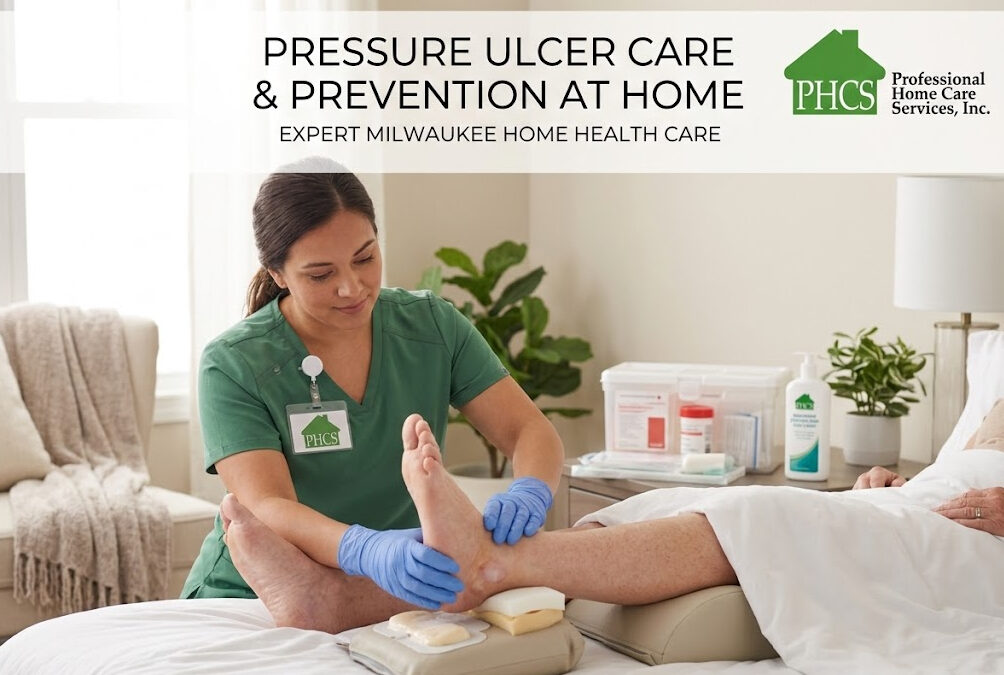


Navigating health challenges in the comfort of your own living space requires skilled support and compassionate attention. One significant concern for many individuals receiving care in the Metro Milwaukee area is the development and management of pressure ulcers, frequently referred to as bedsores. These injuries can cause significant discomfort, increase the risk of infection, and hinder overall well-being.
At Professional Home Care Services, Inc., our dedicated team of Registered Nurses (RNs) and Personal Care Workers (PCWs) is highly trained and committed to preventing, healing, and managing pressure ulcers. For nearly 35 years, we have proudly served our community, always focused on our core mission: Bringing Health Care Back to the Home!
Understanding Pressure Ulcers
Pressure ulcers are localized injuries to the skin and underlying tissue, usually occurring over bony prominences such as the heels, ankles, hips, and tailbone. They result from prolonged pressure on the skin, often in combination with shearing forces, friction, and moisture. This sustained pressure reduces vital blood flow to the area, depriving the tissues of oxygen and nutrients, which eventually leads to damage and breakdown.
For more comprehensive medical insights on the mechanics of skin breakdown, the Mayo Clinic’s overview on bedsores provides an excellent resource on risk factors and early warning signs.
Classifying Pressure Ulcers: Understanding the Stages
Pressure ulcers are classified into stages based on the depth of tissue damage. Understanding these stages is essential for effective intervention:
- Stage 1: Non-blanchable erythema of intact skin. The area may be painful, firm, soft, warmer, or cooler compared to adjacent tissue.
- Stage 2: Partial-thickness skin loss involving the epidermis, dermis, or both. The ulcer presents as a shallow open wound with a red-pink wound bed, without slough. It may also present as an intact or ruptured serum-filled blister.
- Stage 3: Full-thickness tissue loss. Subcutaneous fat may be visible, but bone, tendon, or muscle are not exposed. Slough may be present but does not obscure the depth of tissue loss. This stage may include undermining and tunneling beneath the skin surface.
- Stage 4: Full-thickness tissue loss with exposed bone, tendon, or muscle. Slough or eschar may be present. This severe stage often includes undermining and tunneling and requires intensive wound care management.
- Unstageable: Full-thickness tissue loss in which the base of the ulcer is covered by slough (yellow, tan, gray, green, or brown) and/or eschar (tan, brown, or black). Until enough of this material is removed to expose the base of the wound, the true depth—and therefore the stage—cannot be fully determined.
- Deep Tissue Pressure Injury (DTPI): Intact or non-intact skin with a localized area of persistent, non-blanchable deep red, maroon, or purple discoloration. This can also manifest as epidermal separation revealing a dark wound bed or blood-filled blister. Pain and temperature changes often precede visible tissue damage.
The Centers for Disease Control and Prevention (CDC) and specialized organizations like the Wound, Ostomy, and Continence Nurses Society (WOCN) emphasize the importance of early staging and consistent monitoring to prevent severe complications.
How Our Home Health Nurses Promote Healing
Our RNs play a crucial role in the comprehensive care of pressure ulcers. Their expertise ensures that clients receive the most effective and up-to-date treatments tailored to individual health needs.
- Thorough Assessment: Our nurses conduct detailed, routine evaluations of skin integrity, tracking a wound’s stage, size, depth, and the condition of the surrounding tissue.
- Evidence-Based Wound Care: Utilizing advanced dressings and topical treatments, our clinical team creates an optimal healing environment tailored to the specific stage of the ulcer.
- Care Coordination: We work closely with Case Managers, Discharge Planners, and primary care physicians to ensure a unified approach to recovery.
The Vital Role of Personal Care Services in Prevention
While our RNs manage the clinical treatment of wounds, our Personal Care Workers (PCWs) are the frontline defense in preventing pressure ulcers from developing or worsening. Excellent local Milwaukee home health care relies heavily on these daily preventative measures:
- Routine Repositioning: PCWs assist with turning and repositioning individuals who have limited mobility, relieving pressure on vulnerable areas.
- Hygiene and Moisture Control: Keeping the skin clean and dry is vital. PCWs assist with bathing and promptly manage incontinence to protect the skin barrier.
- Gentle Transfers: Using proper body mechanics and transfer techniques minimizes friction and shearing forces on the skin during movement.
- Vigilant Observation: PCWs communicate any complaints of pain, discomfort, or subtle skin changes directly to the nursing team, catching potential issues before they escalate.
Your Partner in Healing and Prevention
Maintaining an exceptional standard of care is our top priority, reflected in a 99.2% client satisfaction rate. We believe that everyone deserves to age and heal with dignity, comfort, and the highest quality of support. Our skilled RNs and dedicated PCWs work collaboratively to effectively heal existing pressure ulcers and implement proactive strategies to prevent new ones from forming.
If you or a loved one in Metro Milwaukee is dealing with a pressure ulcer, or if you are a Case Manager or Social Worker seeking expert home health care for a client with skin integrity concerns, please reach out to our office at 10827 W Lincoln Ave, West Allis, WI, or call us today at (414) 541-6010. We are ready to discuss your specific needs and develop a customized care plan.
Join Our Caring Team! Are you a compassionate Registered Nurse (RN) or dedicated Personal Care Worker (PCW) looking for a rewarding career in home health care? We are always seeking talented individuals to join our team. Call us at (414) 541-6010 to learn more, or submit a short application at our Home Care Jobs page.


Recent Comments