


Healing Wounds Faster at Home: The Power of Compression Therapy
At Professional Home Care Services, Inc., our skilled nurses frequently care for clients with slow-healing wounds on their legs and feet. One of the most common—and often overlooked—barriers to healing is edema, a buildup of fluid that causes significant swelling. When edema is present, even a minor scrape or bug bite can turn into a stubborn wound that lasts for months.
Fortunately, there’s a highly effective, evidence-based treatment that can dramatically speed up recovery: compression therapy. This article will explain how swelling sabotages the healing process and how our home health team uses compression to get you back on your feet.
Why Swelling Stops Wounds From Healing
The number one cause of persistent leg swelling (edema) is a condition called Chronic Venous Insufficiency (CVI). CVI occurs when the tiny valves inside your leg veins become damaged. Think of these valves as one-way doors that help push blood back up toward your heart. When they fail, gravity wins. Blood and fluid pool in your lower legs, causing several problems:
- Poor Circulation: The excess fluid acts like a traffic jam, preventing oxygen-rich blood and vital nutrients from reaching the wound site.
- Waste Buildup: Just as nutrients can’t get in, metabolic waste and damaged tissue can’t be carried away efficiently. This creates a toxic environment that stalls the body’s natural repair process.
- Skin Damage: Constant swelling stretches the skin, making it fragile, thin, and prone to breaking down or developing new wounds.
When a client has both a wound and edema, healing can be a long and frustrating journey. That’s where compression therapy becomes an essential tool in our home health care toolkit.
Licensed by Google
How Compression Therapy Promotes Healing
Compression therapy is the application of controlled external pressure to the limbs. This pressure essentially gives your veins the support they need to function correctly. By gently squeezing the leg, compression therapy:
- Reduces Swelling by pushing pooled fluid back into circulation.
- Improves Blood Flow, allowing oxygen and healing factors to reach the wound.
- Supports the Muscles and Veins, making them more effective at moving blood toward the heart.
- Decreases Pain associated with swelling.
With the swelling under control, the body can finally focus its resources on building new tissue and closing the wound.
Choosing the Right Type of Compression Therapy
Not all compression is created equal. Our clinical team at Professional Home Care Services, Inc. will assess your specific needs to determine the best approach. The choice depends on the type of wound, the amount of swelling, and your mobility.
- Compression Bandaging: This is the gold standard for treating active wounds with edema. Our trained nurses apply multiple layers of specialized bandages that provide sustained, graduated pressure. These systems are designed to stay on for several days, can be applied over a wound dressing, and are highly effective at reducing significant swelling.
- Compression Stockings: These are elastic socks used for edema maintenance after a wound has healed or to prevent swelling in at-risk clients. They are generally not used over open wounds because they can be difficult to apply over a dressing and can trap wound drainage. They should be replaced every 3-6 months as they lose their elasticity.
- Velcro Wraps (Inelastic Compression): These adjustable garments are an excellent alternative to stockings. They are easier for many clients to put on and take off themselves and can be adjusted throughout the day as swelling decreases. They are often used for long-term edema management.
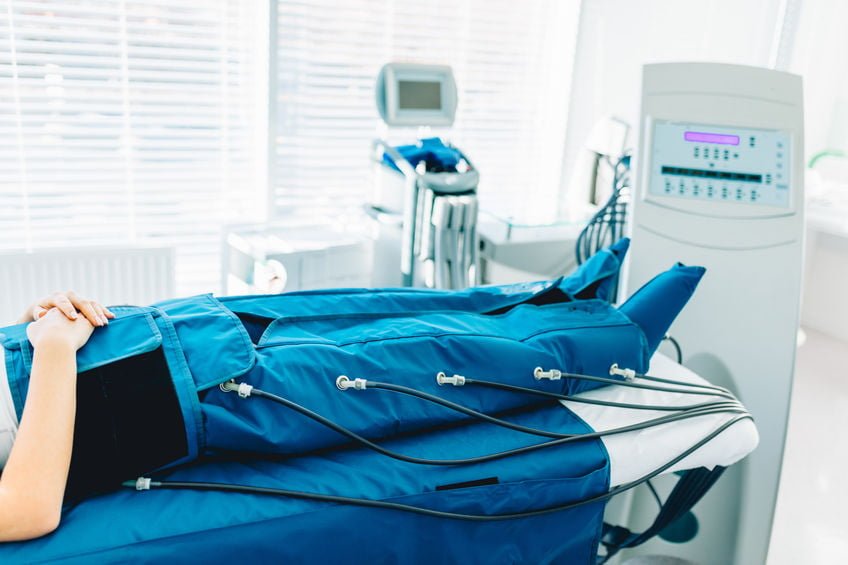
- Pneumatic Compression Pumps: For clients with limited mobility, a pump can be a great solution. These devices consist of sleeves that wrap around the legs and are connected to a pump. The sleeves rhythmically inflate and deflate, massaging fluid out of the limbs. This is typically done for an hour or two each day while resting.
Success Stories: Compression Therapy in Action
- Mr. Rodriguez’s Venous Ulcer: Mr. Rodriguez, 78, had a painful ulcer on his ankle for four months due to CVI. His legs were constantly swollen, and the wound produced a lot of drainage. Our home health nurse started a weekly regimen of multi-layer compression bandaging. Within two weeks, the swelling was visibly reduced. With improved circulation, the wound began to heal, and after eight weeks of consistent therapy, it was completely closed.
- Mrs. Gable’s Post-Surgical Swelling: After knee surgery, Mrs. Gable developed severe edema in her lower leg, causing the skin to become fragile and start breaking down. She found it difficult to put on traditional stockings. We provided her with a set of adjustable velcro wraps. She could apply them herself over a light dressing, which empowered her to participate in her own care. The wraps controlled the swelling, prevented further skin damage, and allowed the fragile areas to heal quickly.
- Mr. Chen’s Lymphedema: Mr. Chen has chronic lymphedema and is mostly bed-bound, making him susceptible to both swelling and wounds. His care plan includes daily sessions with a pneumatic compression pump. Our home health aide helps set up the pump, which gently reduces the fluid in his legs. This therapy has not only prevented new wounds from forming but also reduced the pain and heaviness he felt in his legs.
Important Considerations for Your Care
While compression is highly effective, safety is our top priority.
- Arterial Disease Check: Before starting therapy, our nurses will ensure you have adequate blood flow to your legs. Compression is not appropriate for individuals with significant Peripheral Arterial Disease (PAD).
- Comfort is Key: We understand that compression can feel tight, especially at first. Our team will work with you to ensure a proper fit and manage any discomfort.
- Teamwork Works: Your participation is crucial! Elevating your legs whenever you’re sitting or resting is a simple but powerful way to help reduce swelling and support the work of the compression therapy.
Your Partner in Healing at Professional Home Care Services
Stubborn wounds and leg swelling can significantly impact your quality of life, but you don’t have to manage them alone. Compression therapy is a cornerstone of modern wound care that can dramatically shorten healing time and prevent future problems.
The team at Professional Home Care Services, Inc. is dedicated to creating a personalized care plan that works for you, right in the comfort of your own home. If you or a loved one is struggling with edema or a non-healing wound, contact us today to learn how we can help.
For More Information:
- Wound Care Education Network: https://www.woundcareeducationnetwork.com/compression-therapy-for-wound-care
- Mayo Clinic – Compression Stockings: https://www.mayoclinic.org/diseases-conditions/varicose-veins/expert-answers/compression-stockings/faq-20058129
- Cleveland Clinic – Venous Ulcers: https://my.clevelandclinic.org/health/diseases/17168-venous-ulcers


Recent Comments